Missions and launches
SpaceX launches 35th ISS resupply mission with science cargo
NASA launched the 35th SpaceX resupply mission to the ISS on October 13, 2026, with over 2,860 kg of cargo and the final solar arrays.
In brief
NASA launched the 35th SpaceX resupply mission to the ISS on October 13, 2026, with about 2,860 kg of cargo including the final Roll-Out Solar Arrays and experiments on artificial retinas, heart tissue, glass and the brain. On October 15 Dragon docked to the Harmony module; it will stay at the station until mid-November before returning off the coast of California.
Key points
- The 35th SpaceX resupply mission launched on October 13, 2026, at 6:33 a.m. EDT from pad 40 at Cape Canaveral.
- Dragon docked to the ISS Harmony module on October 15 at 10:27 a.m. EDT.
- The cargo weighs more than 6,300 pounds, about 2,860 kg, of supplies, hardware and experiments.
- The final pair of Roll-Out Solar Arrays completes the station's electrical upgrade and will be installed during spacewalks in the fall.
- Dragon will stay at the station until mid-November and will return with a splashdown off California.
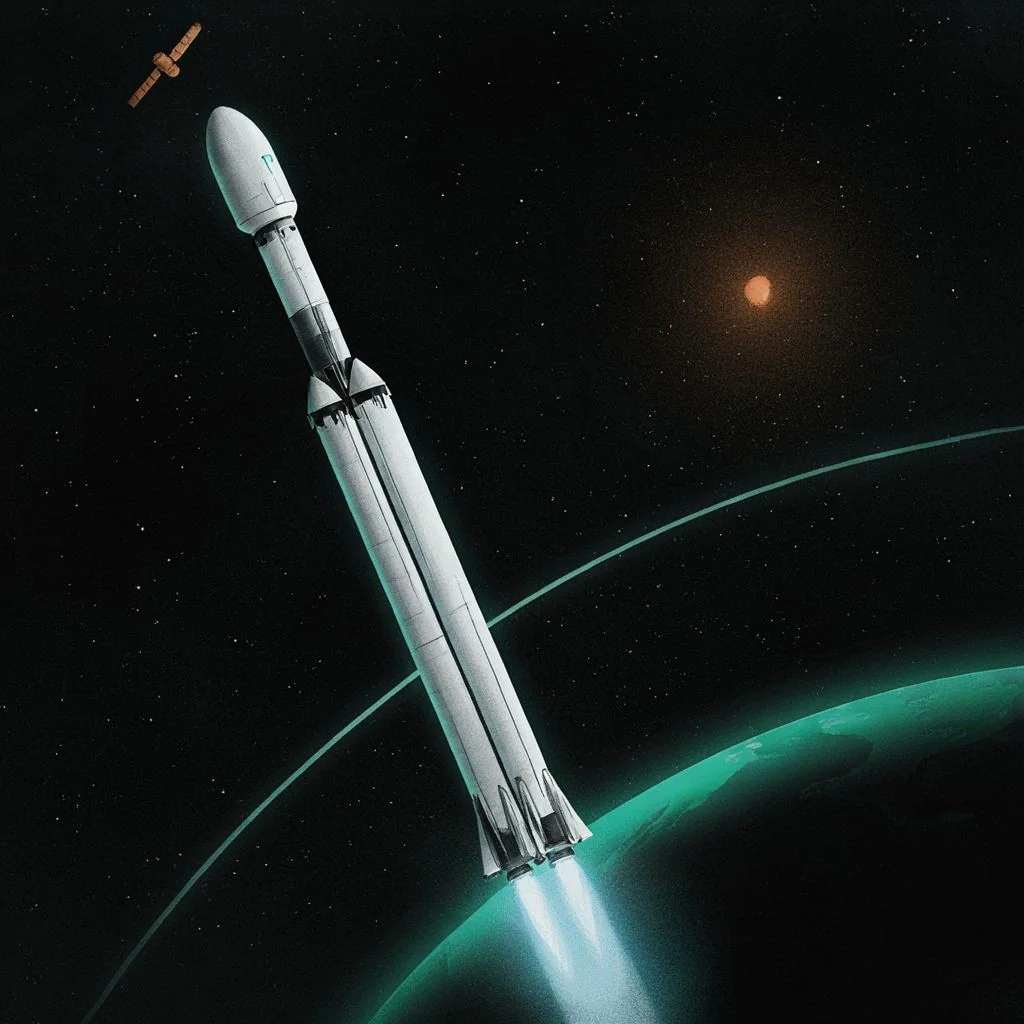
The 35th SpaceX mission to resupply the ISS lifted off on Tuesday, October 13, 2026, at 6:33 a.m. EDT, 12:33 in Italy. A Falcon 9 rocket left launch complex 40 at Cape Canaveral Space Force Station in Florida, carrying the Dragon capsule with more than 6,300 pounds of supplies, hardware and new experiments, roughly 2,860 kg, bound for the International Space Station. According to NASA’s announcement, the cargo also includes the final pair of solar panels that completes the station’s electrical upgrade. Two days later, on October 15, Dragon docked with the ISS.
Launch and docking
The liftoff took place on a Falcon 9, SpaceX’s two-stage rocket. After separating from the rocket, the Dragon capsule reached the station’s orbit on its own. According to NASA’s space station blog, on Thursday, October 15, at 10:27 a.m. EDT Dragon docked autonomously to the space-facing port of the Harmony module, delivering more than 6,300 pounds of crew provisions and scientific equipment.
New solar panels for the station
These are the final pair of International Space Station Roll-Out Solar Arrays, the “unrollable” panels NASA has installed in several stages to reinforce the station’s electrical power supply. With this delivery, the upgrade of the power system is complete. According to NASA, more electricity means more energy for research, for operations and for a safe, controlled deorbit of the ISS at the end of its life. The astronauts will install the new panels during a series of spacewalks planned for the fall.
Scientific experiments on board
The scientific cargo covers four fronts, all tied to microgravity. The first concerns vision: Dragon carried hardware to produce artificial retinas in microgravity, which could help restore the visual capacity of patients on Earth. The second is cardiological: on board are three-dimensional heart tissue models, designed, according to NASA, to advance large-scale drug testing on future space missions. The third is a materials science program, to study how a new type of glass forms in the absence of weight. The fourth concerns the brain: brain organoids in orbit that may point to therapeutic targets against Alzheimer’s, Parkinson’s and multiple sclerosis. These investigations add to the hundreds already conducted on the station in biology, biotechnology, physical sciences, and Earth and space sciences.
Next steps of the mission
Dragon will remain docked to the ISS until mid-November, when it will detach to reenter the atmosphere and splash down off the coast of California. It will bring back to Earth research and cargo that must be delivered quickly to laboratories. In the background, NASA ties the research on the ISS to the Artemis program, with which the agency will return astronauts to the Moon in preparation for human exploration of Mars.
Sources: