Space explained
NASA measures before explaining: brown dwarfs, Mars and the Moon
On October 8, 2026 NASA announced the first scientific results from the SPHEREx space telescope, which observed 37 brown dwarfs.
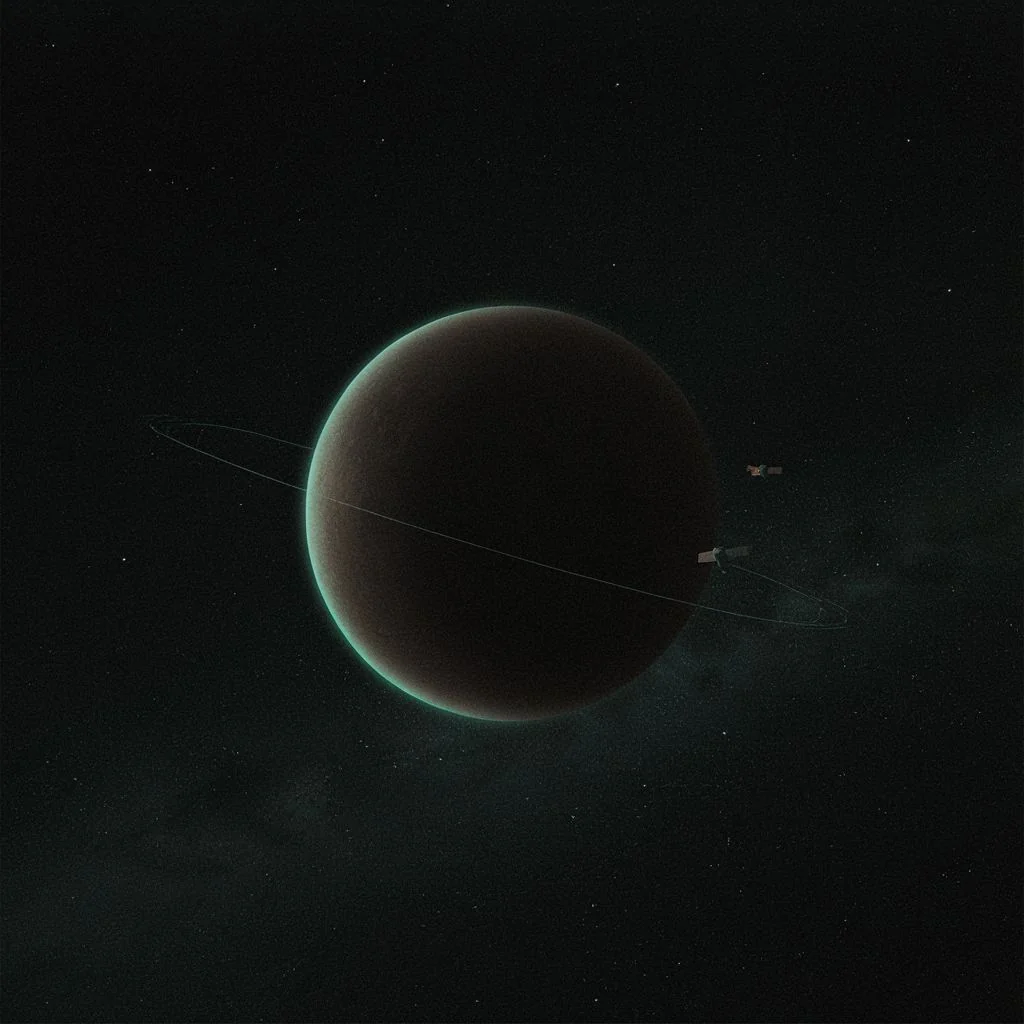
In brief
Brown dwarfs observed by SPHEREx, a Martian sunrise photographed by Curiosity, dead satellites inspected by SSPICY and lunar suits to be discharged: NASA shows how direct measurement precedes theory.
Key points
- SPHEREx observed 37 brown dwarfs in 102 colors, revealing atmospheres rich in water, carbon dioxide, carbon monoxide and methane
- Curiosity captured on August 11, 2026 the most detailed panorama of the Mount Sharp yardangs and surpassed 1 kilometer of elevation gain on Mars
- The SSPICY mission, launched on October 1, 2026, will inspect up to four inoperative objects in orbit without touching them
- The Lunar Grounding Challenge offers up to 150,000 dollars to neutralize the electric charge of lunar suits, with submissions due by January 15, 2027
On October 8, 2026 NASA announced the first scientific results from the SPHEREx space telescope, which observed 37 brown dwarfs. These objects sit halfway between stars and exoplanets: they are born like stars but never manage to burn hydrogen. In the preceding days, the agency released a panorama of sunrise on Mars taken by the Curiosity rover. It launched the SSPICY mission to inspect decommissioned satellites. It also opened a public challenge worth 150,000 dollars on the electrical safety of lunar suits. Four announcements telling one shared story: measure before explaining, in the most hostile places of the solar system.
Rich atmospheres in the coldest brown dwarfs
Brown dwarfs form from the collapse of gas clouds, like stars. They lack the mass, however, to sustain hydrogen fusion in their core. They glow faintly with internal heat and, unlike planets, do not orbit any star: they are free objects, slowly cooling on their own. For this reason scientists describe them as “goth”. They are independent celestial bodies, destined to fade away alone into eternity. Zafar Rustamkulov, lead author of the study published in The Astrophysical Journal and reported by NASA, sums it up.
SPHEREx was launched in March 2025 and is managed by the Jet Propulsion Laboratory. It observed 37 nearby brown dwarfs, covering the entire temperature range of the category. Temperatures run from about 4,000 degrees Fahrenheit (2,200 Celsius) down to minus 10 Fahrenheit, that is minus 20 Celsius. The atmospheres revealed are rich in water, carbon dioxide, carbon monoxide and methane, molecules similar to those of the gas giants of our solar system.
The telescope measures the brightness of each object in 102 different colors, from deep visible red to infrared. Those wavelengths are practically invisible from the ground, because water vapor in the atmosphere absorbs them. Current models follow the general chemical trend, but struggle to reproduce the cloudy transitions. No two brown dwarf spectra at the same temperature are identical. The study covers three dozen objects. Thousands more are already in the queue for analysis.
Observing brown dwarfs is, curiously, a side project for SPHEREx. The main mission takes about 3,600 images a day to map hundreds of millions of galaxies. The goal is to reconstruct the very first moments after the big bang, the event that gave rise to the universe.
The Martian sunrise Curiosity had waited for since 2014
The same thread, reading the history of a world in the colors of its atmosphere, links brown dwarfs to Mars. On August 11, 2026 the Curiosity rover captured the most detailed panorama ever obtained of the wind-carved cliffs on Mount Sharp. It was the mission’s 4,982nd sol. A sol is a Martian day, 24 hours and 37 minutes long. The six images, assembled on Earth after the data arrived, show the ridges lit in bluish tints at local sunrise, at 8:30. Unlike most Curiosity photos, the processing did not correct the white balance, preserving the true look of the morning.
The layer of ridges, called yardangs, extends for about 16 kilometers (10 miles) on the northwestern slope of Mount Sharp. The mountain is 5 kilometers high. The rover has been climbing it since 2014. Curiosity has just passed another milestone: 1 kilometer (0.6 miles) of elevation gain, the highest ever achieved on Mars. The yardang layer is visually anomalous, with the wrong color and strange tilts, almost like plaster stuck onto the mountain.
The yardang layer seems out of place. But that is exactly what makes reaching it exciting. No one knows for certain what created it: one idea is that it could be ash deposited by ancient volcanic eruptions, said Ashwin Vasavada, mission scientist at the Jet Propulsion Laboratory.
In 2027 the team aims for the base of the cliffs, where the robotic arm will gather data impossible to obtain so far.
From telescopes to dead satellites: the SSPICY step
Some techniques allow a telescope to read an atmosphere light-years away. In low Earth orbit the same techniques serve to read the health status of a dead satellite. On October 1, 2026 NASA launched SSPICY, the Small Spacecraft Propulsion and Inspection Capability mission, from Vandenberg. It is a technology demonstration entrusted to the company Starfish Space. In early 2027 the Otter vehicle will approach as close as a few hundred meters to four inoperable American objects, satellites and rocket stages. It will use autonomous software with minimal intervention from the ground.
During each inspection, Otter will collect rotation rates, orientation and surface conditions. An electric propulsion system will allow transit between targets, while an articulated robotic arm will test fine maneuvering between different orbits. The vehicle will not touch or dock with any satellite. The purpose is to prepare future in-orbit servicing missions or safe removals toward Earth’s atmosphere. Thousands of satellites are launched every year, and orbital debris is the fastest-growing risk.
How you discharge an astronaut on the Moon
The debris problem finds a parallel at the extreme edges of the inner solar system, where even a spacewalk becomes an electrical hazard. At the lunar south pole, walking on the ground charges the suit through friction, like a sweater in winter, and the surrounding plasma adds more charge. In regions of permanent shadow sunlight never arrives. There, the radiation that normally releases excess electrons is missing, and the suit can build up a considerable negative potential. The lunar surface offers no natural mechanism to discharge it.
The critical moment is the return. The lander, that is, the descent vehicle parked in the lit zone, has a slightly positive potential. When the charged astronaut approaches, the difference in potential can generate an electric arc capable of damaging the suit’s layers, the circuits and the oxygen-rich interior environment. For this reason NASA opened the Lunar Grounding Challenge on October 5, 2026. The challenge offers up to 150,000 dollars in prizes for a device that neutralizes the charge before contact. Proposals must be submitted by January 15, 2027.
Where the models stop, the measuring begins
Four announcements, one shared trait: direct measurement comes before theory. Brown dwarfs show that chemical models work up to the cloudy transitions, then get it wrong. The Martian yardangs still lack a certain explanation. SSPICY collects data on objects never inspected up close, and the lunar challenge stems from the fact that no current project knows how to discharge a suit. Construction always starts with what cannot be explained.
What changes now? For SPHEREx, the analysis of thousands of new spectra may indicate where the models need correcting. For Curiosity, the coming months will be spent in layers rich in sulfates and carbonates, signs of ancient drying. For SSPICY, early 2027 will tell whether autonomous inspection works in real conditions. For the Moon, everything depends on the ideas that arrive by January.
Sources: