Missions and launches
BepiColombo module separates after 9.9 billion km trek to Mercury
BepiColombo separated its transfer module on September 3, 2026, the first step of the arrival at Mercury after eight years and 9.9 billion km of travel.
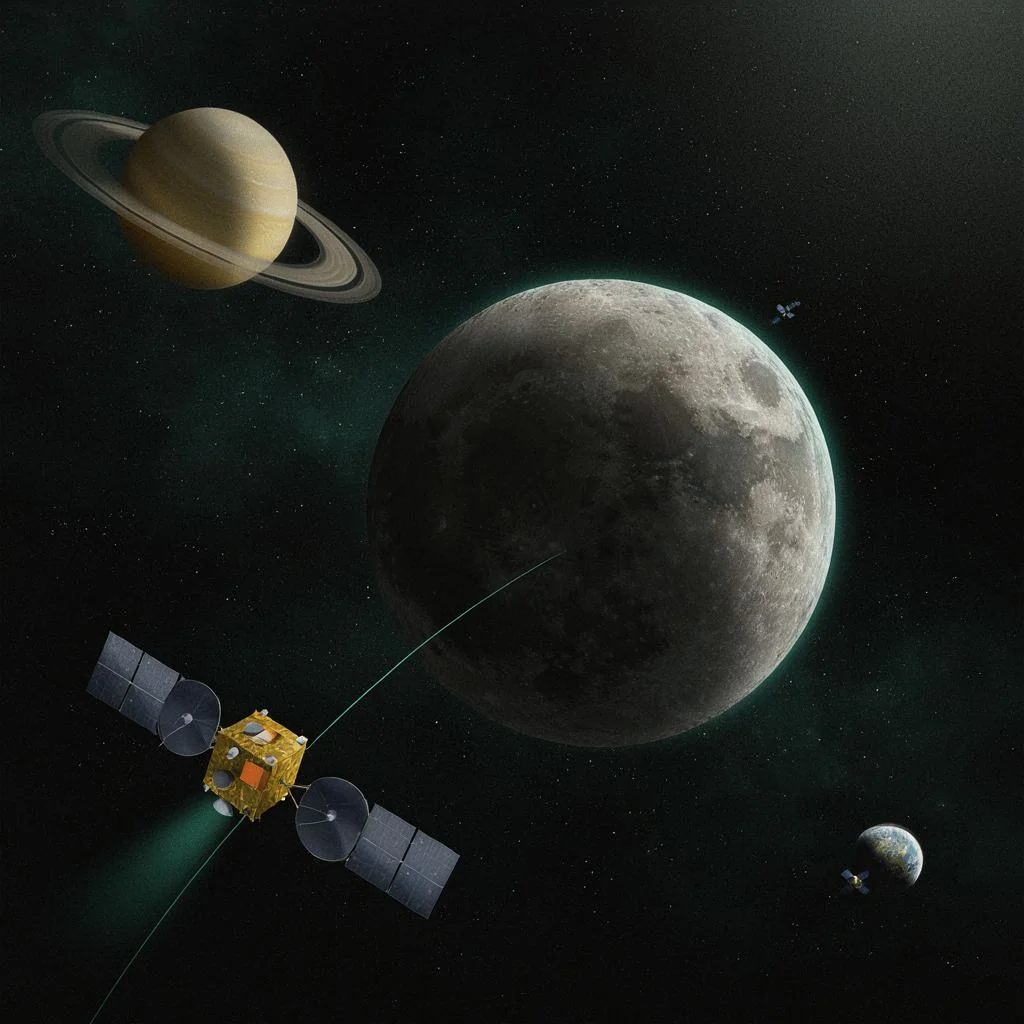
In brief
On September 3, 2026, BepiColombo completed the separation of its transfer module, the first step of the arrival at Mercury after eight years and 9.9 billion kilometers. In the coming months the two orbiters, European and Japanese, will enter orbit and then separate, creating for the first time a pair of spacecraft in simultaneous orbit around Mercury.
Key points
- BepiColombo's transfer module separated from the spacecraft on September 3, 2026, starting the arrival at Mercury.
- The mission has traveled 9.9 billion kilometers in eight years, with nine planetary flybys: Earth once, Venus twice, and Mercury six times.
- The transfer module has no computer or antenna and will orbit the Sun indefinitely after separation.
- In November 2026 the two orbiters will enter orbit around Mercury; on December 9-10 they will separate from each other.
- BepiColombo will be the first mission with two spacecraft in simultaneous orbit around Mercury, the least explored planet of the inner solar system.
On September 3, 2026, the BepiColombo mission completed the first step of its arrival toward Mercury. The command came from the European Space Agency’s control center in Darmstadt, Germany. After eight years of flying together through the inner solar system, the module that carries the spacecraft toward Mercury separated from the rest of the craft. Planetary arrivals play out through sequences of maneuvers that the public rarely sees, yet those maneuvers decide the fate of years of work. The moment had been awaited for 2:00 p.m. Central European Time, during a live broadcast from the main control room. The most critical confirmation arrived later: at 3:53 p.m., as early as possible, the spacecraft’s signal returned to Earth.
The module that travels without a voice and without a computer
Five days before the separation, the European agency had gathered journalists in an online press conference to explain how delicate this maneuver was. The transfer module is called the Mercury Transfer Module, and it served as the “transport vehicle” toward Mercury. For eight years it carried the ESA Mercury Planetary Orbiter and the Mercury Magnetospheric Orbiter of the Japanese agency JAXA. The latter orbiter is nicknamed Mio.
After the separation, the module is left without any means of control: it has no computer on board and no antenna to communicate with Earth. It will continue orbiting the Sun indefinitely, while the two scientific modules get to work. The calculated trajectory calls for a pass about 130,000 kilometers from Mercury at the end of October. That distance is enough to no longer get in the way of anything. Then the module will drift away forever into interplanetary space.
Eight years, nine flybys, 9.9 billion kilometers
According to esa.int, BepiColombo’s journey covered 9.9 billion kilometers with nine planetary flybys. The mission was launched on October 20, 2018. It flew past Earth once, Venus twice, and Mercury itself six times. It used the gravity of each planet as a brake to align itself with the orbit of the innermost planet. A useful comparison helps picture the scale: those 9.9 billion kilometers correspond to roughly 250,000 trips around the Earth.
The images of this journey come from an unexpected source. The three monitoring cameras mounted on the module were built to check the status of the spacecraft itself, not to take photographs. In their frames, the solar panels, the antennas, and the European orbiter’s magnetometer boom appear in the foreground. The cameras have no shutter. Many of the original images therefore contained streaks of light recorded while the sensor was being read. Those streaks were later largely removed. It is the first time these images have been assembled into a video of the entire journey.
The arrival at Mercury, the least explored planet
The reason for all this effort is simple to state and hard to achieve. Mercury is the least explored planet of the inner solar system. It is a small desert world so close to the Sun that reaching it in orbit is harder than reaching Pluto. Studying it sheds light on the history of the entire solar system. BepiColombo is the first European and Japanese project aimed at this planet. It is considered the most complex mission ever sent there. Its orbiters will be only the second and third to orbit the planet.
Two decisive milestones remain in the coming months. In November, the two orbiters, still in their stacked configuration, will enter orbit around Mercury. Then, on December 9 and 10, 2026, they will separate from each other. From that moment, BepiColombo will be the first mission with two spacecraft in simultaneous orbit around Mercury. A first that will turn every observation into a double measurement, with the European and Japanese eyes fixed together on the same world.
As with every spaceflight date, these too may slip. The final verification will come only with confirmation of the November orbital insertion. That confirmation will have to arrive from the Darmstadt control center.
Sources: