Space explained
AI & Space Tech: Protecting Earth, Exploring the Moon
Space tech: Humanity has always turned its gaze to the sky, driven by curiosity about the unknown and by the ambition to push beyond its own limits.
In brief
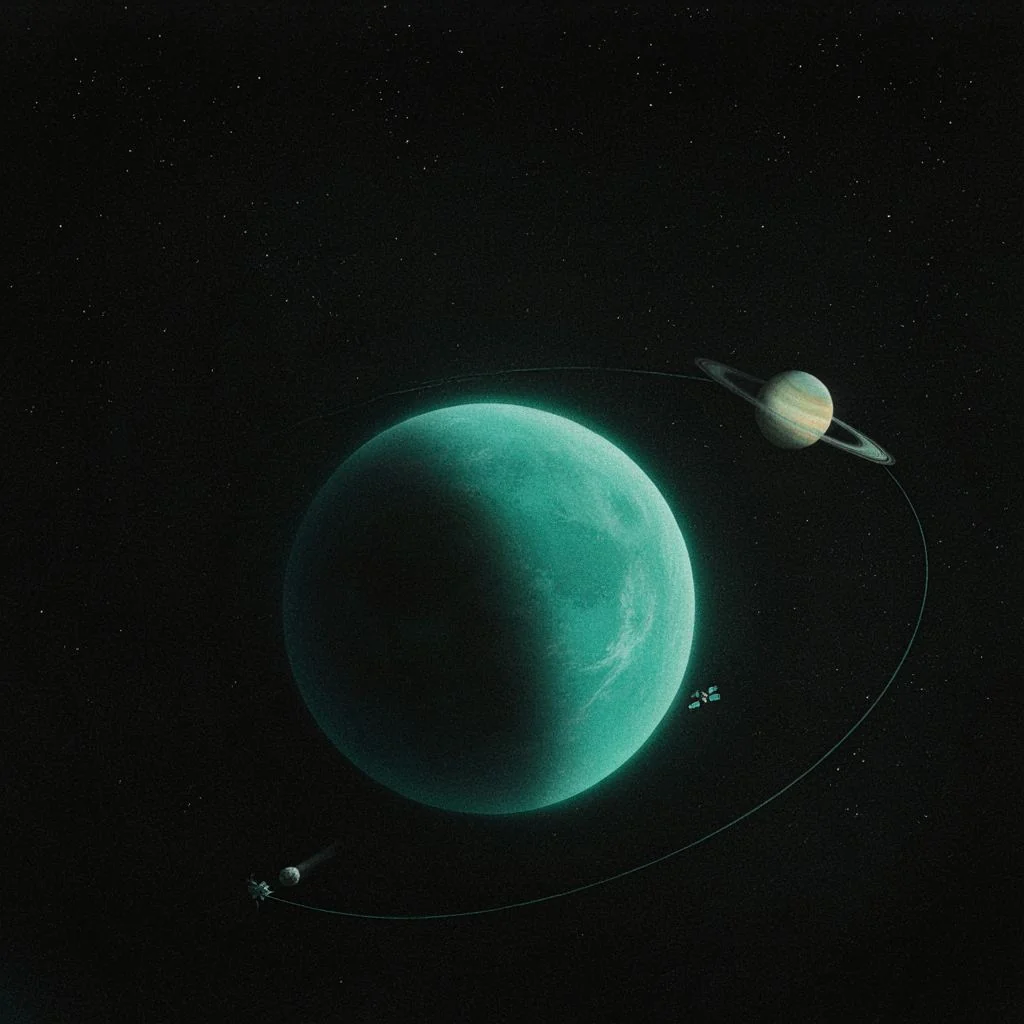
ASI is innovating space exploration with the autonomous ETNA rover for the Moon, while the COSMO-SkyMed constellation monitors the severe effects of climate change on Earth. Artificial Intelligence is fundamental in both fields, linking humanity's ambition to explore new frontiers, with its complex roots as demonstrated by the figure of Wernher von Braun, and the urgent need to protect our planet.
Key points
- The ETNA rover passed tests on Mount Etna, simulating lunar conditions to develop autonomous robotic mobility systems.
- The Universal Locomotion System (ULS) program is central to ASI's roadmap for robotics and Artificial Intelligence, aiming at a sustainable human presence on the Moon.
- Wernher von Braun's story highlights the complex historical and ethical roots of space exploration, between scientific ambition and difficult contexts.
- COSMO-SkyMed satellites monitor climate change, showing coastal retreat and coral reef stress in the Maldives.
- Artificial Intelligence is crucial both for the autonomy of space rovers and for the analysis of terrestrial satellite data, linking exploration and safeguarding.
- Technologies developed for extreme space environments can offer solutions and lessons for tackling environmental challenges on Earth.
Humanity has always turned its gaze to the sky, driven by curiosity about the unknown and by the ambition to push beyond its own limits. Today, this exploratory drive is accompanied by a critical analysis of our planet, where environmental challenges demand urgent solutions. The interplay between space exploration and Earth observation defines an era. Exploration is bold. Space technologies make observation indispensable. Advanced robotics and Artificial Intelligence play a crucial role in this era.
The Ambitious Drive for Exploration and Its Complex Roots
The Italian Space Agency has recently celebrated the success of the experimental campaign of the ETNA rover, the acronym for Exploration Technology for Navigation & Autonomy. This robot was tested on Mount Etna. The site was chosen for its unique geological features that replicate lunar conditions. These include extensive lava surfaces and uneven slopes. The Universal Locomotion System (ULS) program is developing a new generation of robotic mobility systems. ETNA is part of ULS. These systems will operate in extreme environments, such as the Moon, supporting future human settlements and scientific missions.
The impulse to reach the Moon, however, has deep and complex roots in history. Figures such as Wernher von Braun embody the extraordinary scientific ambition that propelled humanity into space, but also the ethical dilemmas of a dark era. Von Braun was a brilliant pioneer. His career unfolded in a difficult context. Scientific research had to contend with a totalitarian regime. His story is told in the podcast “Su la Testa”. This podcast is produced by the Italian Space Agency. History reminds us that technological progress is not separate from moral choices and the historical context.
Lunar rovers, like ETNA, represent the evolution of this exploratory drive, with the goal of operating with high levels of autonomy. They will be called upon to transport scientific instruments, carry out inspections and contribute to the construction of infrastructure, even in the absence of direct supervision.
This autonomy is fundamental for a sustainable human presence on the lunar surface, opening new possibilities for the exploration of our satellite and beyond.
Artificial Intelligence Guides the Future of Space and Earth
The Robotics and Artificial Intelligence roadmap is a pillar for future exploration defined by ASI for the development of enabling technologies. The ULS program is led by Thales Alenia Space Italia. Several Italian centers of excellence contributed. ULS allowed ETNA to demonstrate advanced capabilities in locomotion, autonomous navigation and intelligent control of scientific payloads. These advances are essential for overcoming the challenges of space environments, where direct human intervention is limited or impossible, and AI takes on a central role.
AI and robotics drive lunar exploration. Other space technologies offer us a unique perspective on Earth. One example is the Italian COSMO-SkyMed satellite constellation. The images processed by COSMO-SkyMed, for instance, show the geographic transformation of the Maldives due to climate change. Rising sea levels cause the coastline to retreat, with islands shrinking and vegetation struggling against salinization.
The analysis of this satellite data, often supported by AI algorithms, is crucial for understanding the impact of human activities on our planet. The future of atolls like the Maldives is not guaranteed.
The ability to monitor these changes accurately from orbit is an invaluable asset.
The technology developed for space exploration, therefore, finds a direct and vital application in safeguarding the Earth, providing data for informed decisions.
The Fragility of Earth Seen from Above and the Lessons of Space
COSMO-SkyMed observations reveal an alarming reality. The fragile coral reef is under stress. Islands such as Hulhumalé, Malé, Gulhifalhu and Thilafushi show clear signs of alteration. These data underscore the urgency of protecting the beauty and biodiversity of our planet. This is a task that space instruments make possible. They do so through constant and detailed monitoring. The view from above reminds us of the finiteness of Earth’s resources and the vulnerability of ecosystems.
Lunar rovers like ETNA face challenges. They must navigate highly rugged terrain and operate autonomously. These challenges can offer insights for resource management on Earth. The development of robust and resilient systems for extreme environments, whether lunar or terrestrial, is a priority. Innovation in robotic mobility and intelligent control is a priority not only to extend our presence beyond Earth, but also to develop technologies that can help us mitigate the effects of climate change or manage natural disasters more effectively.
Ultimately, the space adventure is not a mere exercise in human ambition. But a testing ground for technologies that have a direct impact on our ability to understand and protect the Earth. Space innovation is intrinsically linked to the future of our planet. It includes the pursuit of a sustainable presence on the Moon. This pursuit is guided by advanced Artificial Intelligence and satellite surveillance of climate change.
Sources: