Space explained
Space Exploration Unveils Earth's Seasons & Mars' Geology
Space exploration unveils the secrets of our cosmic neighbors, offering a deeper understanding of planetary processes.
In brief
DSCOVR and Curiosity missions offer unique perspectives on Earth (seasons from afar) and Mars (geology up close), demonstrating how continuous space exploration is essential for understanding planetary processes through detailed and long-term observations.
Key points
- Earth's seasons are caused by the planet's 23.5-degree axial tilt, resulting from an ancient collision.
- The EPIC camera aboard the DSCOVR mission captures full-disk images of Earth every few hours from 1.6 million kilometers away.
- The Curiosity rover has surpassed 5000 Martian days and is exploring geological bands in Mars' 'Valle Grande'.
- Instruments like APXS, MAHLI, and ChemCam LIBS are used by Curiosity to analyze Martian rock formations.
- The DSCOVR mission has collected over a decade of crucial data on Earth's vegetation, clouds, ice, and aerosols.
- Continuous space exploration and prolonged observations are crucial for understanding planetary cycles and long-term changes.
Our place in the universe is often best understood by observing planets from afar or exploring them up close. Two space missions, one focused on Earth and the other on Mars, are providing unique perspectives on the cycles and geological features that shape these worlds. Broad views of Earth’s seasons are captured from millions of kilometers away. Martian rock formations are also analyzed in detail. Space exploration unveils the secrets of our cosmic neighbors, offering a deeper understanding of planetary processes.
The Dance of Earth’s Seasons Seen from Deep Space Thanks to Space Exploration
Earth’s seasons are a fundamental phenomenon, primarily caused by our planet’s axial tilt of approximately 23.5 degrees. According to Orbita, this tilt is the result of an ancient planetary collision with a body called Theia, which occurred about 4.5 billion years ago. That cataclysmic event also gave rise to the Moon. Such a tilt causes the Northern Hemisphere to lean towards the Sun in June, bringing more direct sunlight and longer days. The Southern Hemisphere does the same around the December solstice.
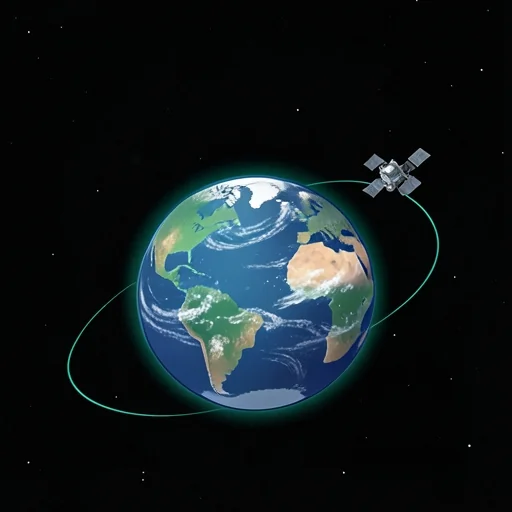
This perspective is beautifully captured by the EPIC camera. EPIC stands for Earth Polychromatic Imaging Camera. The camera is aboard NOAA’s (National Oceanic and Atmospheric Administration) DSCOVR (Deep Space Climate Observatory) mission. The probe maintains an orbit between the Sun and Earth, approximately 1.6 million kilometers from our planet. The camera offers a nearly continuous view of the sunlit hemisphere. EPIC captures a full-disk image of Earth’s sunlit face every few hours.
Images taken from this distance clearly show how the view of the Western Hemisphere changes throughout the year. During the December solstice, South America is near the center of the disk. Much of Antarctica is visible. North America is partially out of view. In June, the situation reverses. The Northern Hemisphere and North America are more centered. Arctic sea ice comes into view, and Antarctica disappears completely.
Tools and Challenges in Space Observations of Earth and Beyond
DSCOVR’s orbit also has its peculiarities. The probe follows a three-dimensional figure-eight path, called a Lissajous orbit. This path is designed to keep the spacecraft. It keeps it near Lagrange point 1. There, the gravitational forces of the Sun and Earth balance with the centrifugal force. This makes it easier for engineers to maintain the probe’s position without using much fuel. The trajectory causes DSCOVR’s distance from Earth to oscillate, influencing the apparent size of our planet in the images. The probe was 1,447,327 kilometers from Earth on December 21, 2023, compared to 1,561,901 kilometers on September 22, 2024. The angle between the Sun, Earth, and the satellite varies. It varies between 2 and 12 degrees. This makes Earth appear more or less round.
While DSCOVR observes Earth from afar, the Curiosity rover is exploring the surface of Mars, celebrating significant milestones. In recent weeks, the rover celebrated its 14th “Landiversary” on August 6, surpassed the 1-kilometer elevation mark, and completed its 5000th sol, a Martian day, in early September. Curiosity is currently ascending the valley informally known as “Valle Grande”, after overcoming an “erosional supersurface” that marks a gap in the normal rock record. It is now traversing an area characterized by thin bands that offer new geological insights.
The Martian terrain in this area is composed of outcrops. The outcrops are scattered and have a rough, often nodular texture. They are surrounded by abundant sand, including coarse and pebbly sand. The bands vary between 25 and 200 meters in diameter. This is equivalent to approximately 80-650 feet. They show morphological changes; some areas are sandier, others have continuous outcrops. The rover has used instruments such as APXS (Alpha Particle X-ray Spectrometer) and MAHLI (Mars Hand Lens Imager) to investigate the nodular bedrock at “Cerro Armazones” and “Monte Melimoyu”. ChemCam LIBS (Laser-Induced Breakdown Spectroscopy) has acquired data on a dark nodule cluster at “Tuta Huallpas” and on the dark float rock “Acllahuasi”.
Continuous observations, although on different scales and in different contexts, are fundamental to building a comprehensive understanding of planetary environments.
The Value of Continuity for Deciphering Worlds
The DSCOVR mission has demonstrated the value of continuity. After more than a decade in space, EPIC has broken new ground in understanding daily and seasonal cycles on a planetary scale. It has collected diurnal and seasonal data on many key Earth features. These include vegetation, clouds, ice, snow, UV radiation, ocean color, and aerosols.
In parallel with geological activities, Curiosity’s environmental team plans a comprehensive monitoring program. This includes taking dust devil videos, observing the crater rim with “suprahorizon” videos, and acquiring “tau” images to measure dust in the Martian atmosphere. The rover traveled approximately 60 meters, almost 200 feet. It then found an extremely interesting block. The block had abundant small flakes and embedded fragments. It also featured smoother laminated areas. These were investigated with MAHLI (“Yungay” and “Chiu Chiu”), APXS (“Chiu Chiu”), and ChemCam LIBS (“Puya Raimondii” for the rougher textures and “Liolaemus Tacnae” for the smoother areas). The “Sullivan Field,” a sand field containing ripples and mega-ripples, was named in honor of the late Robert Sullivan, a world expert on Martian sands.
Continuous space exploration is essential for unveiling the secrets of celestial bodies.
Curiosity has made close-up observations of the Martian bands, which are identified by tonal differences and promise further details. They complement the global view offered by DSCOVR. Both missions have longevity. They have collected a vast array of data. These joint efforts allow us to appreciate much. We appreciate the majesty of planetary-scale processes and the complexity of surface details. They constantly push the boundaries of our knowledge.
Sources: