Discoveries
Francis Halzen wins the 2026 Nobel Prize in Physics for IceCube
Francis Halzen, who conceived the IceCube neutrino detector in the South Pole ice, has been awarded the 2026 Nobel Prize in Physics.
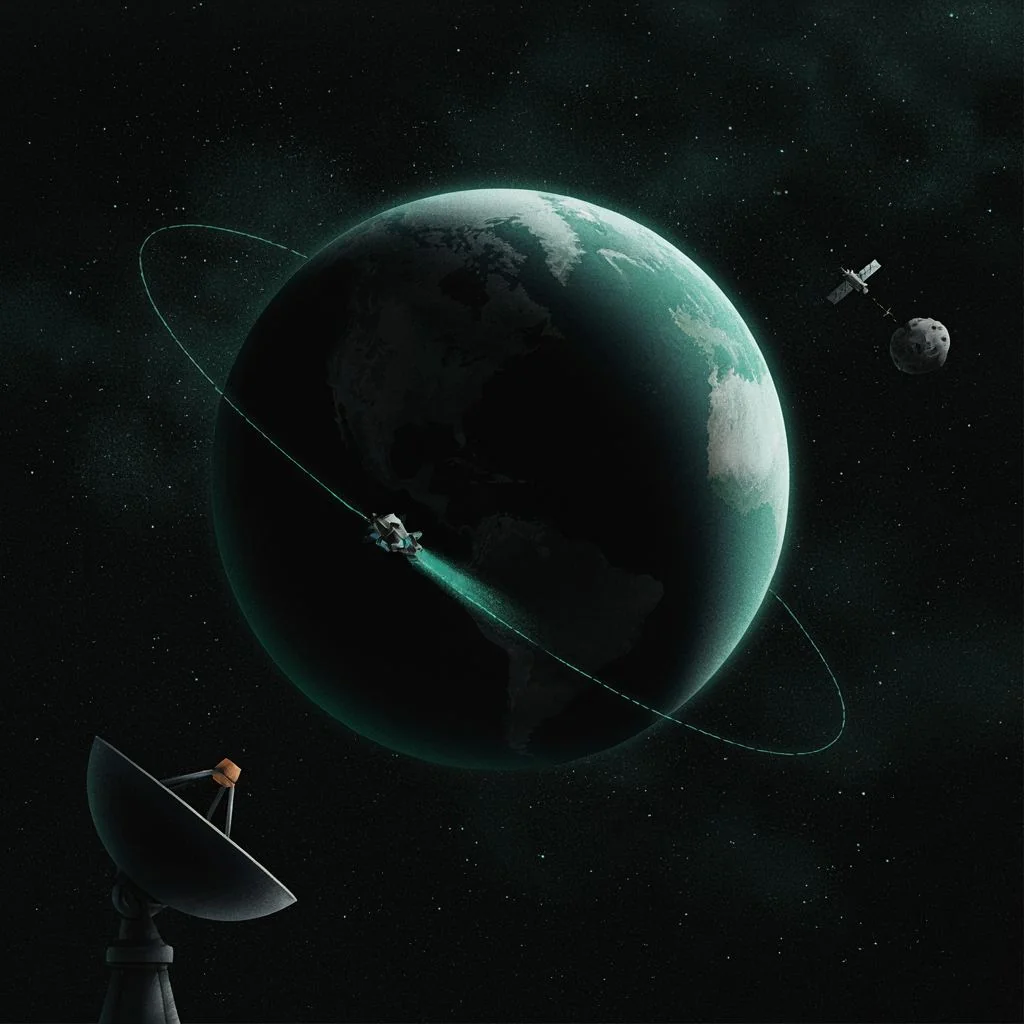
In brief
It was announced this week that a founding leader of the IceCube neutrino detector, buried in the ice at the South Pole, will be awarded the Nobel Prize in Physics. At the same time, a night of exceptionally calm atmosphere over the United Kingdom allowed Tom Williams to photograph Saturn and its moons after the opposition of October 4.
Key points
- IceCube wins the Nobel Prize in Physics, awarded to a founding leader of the collaboration for unprecedented discoveries.
- The IceCube observatory uses nearly 100 holes drilled into the ice at the South Pole, with basketball-sized light detectors lowered into each one.
- High-energy neutrinos that collide with the ice produce secondary particles that emit blue light, the signal IceCube detects.
- Tom Williams's Saturn image was obtained with lucky imaging: thousands of short exposures, stacking the sharpest ones.
- Saturn's opposition occurred on October 4th: the planet's proximity and full illumination from the Sun make this a great time of year to observe it.
On October 6, 2026, the Royal Swedish Academy of Sciences awarded the 2026 Nobel Prize in Physics to Francis Halzen, a professor at the University of Wisconsin-Madison and principal investigator of the IceCube Neutrino Observatory at the South Pole. The Nobel press release cites his “decisive contributions to the IceCube Neutrino Observatory and the discovery of high-energy neutrinos of astrophysical origin.” Halzen is this year’s sole physics laureate.
Halzen proposed hunting for neutrinos in the ice in 1988
Neutrinos are everywhere, yet they barely make themselves known: they pass through the Earth and through our bodies without us noticing, and only very rarely does one interact with an atomic nucleus. Yet astronomers care a great deal about them. Neutrinos reach us without changing direction or losing energy. They can therefore carry information about the cosmos’s natural particle accelerators, sources that fire out particles with energies up to a million times higher than laboratories on Earth can reach.
Halzen, born in 1944 in Tienen, Belgium, first presented his idea of capturing neutrinos at the South Pole in 1988. The Antarctic ice is clear, free from many types of interference and geologically stable, with no earthquakes. According to the news release from the IceCube collaboration, Halzen proposed and proved that ice could serve as a detection medium and was a driving force behind forming the collaboration and establishing the observatory.
IceCube catches neutrinos with thousands of buried sensors
NASA’s Astronomy Picture of the Day for October 11, titled “Ice Fishing for Cosmic Neutrinos,” shows one of the last detector strings being lowered into the ice in 2010. To build IceCube, teams used hot water to melt almost 100 deep holes in the ice near the South Pole. Into each hole they lowered a long string of basketball-sized optical modules. The water in each hole then refroze, locking the sensors in place.
The observatory’s technical page gives the numbers: 86 strings and 5,160 digital optical modules spread through a cubic kilometer of ice, between 1,450 and 2,450 meters deep. The last string went into the ice on December 18, 2010.
When a high-energy neutrino strikes an atomic nucleus in the ice, it releases fast-moving charged particles that emit blue light, known as Cherenkov light. The optical modules record that flash, and from the resulting light patterns researchers reconstruct the particle’s direction and energy. In practice, the Antarctic ice itself is the detector.
IceCube’s discoveries opened up neutrino astronomy
In 2013 IceCube discovered high-energy astrophysical neutrinos, which must originate far outside our solar system. The collaboration has since reported evidence of neutrino emission from two galaxies, TXS 0506+056 and NGC 1068, and in 2023 it observed neutrinos from the Milky Way. Today IceCube brings together about 450 scientists from 58 institutions in 14 countries.
“Francis Halzen has led an international team of researchers and engineers who have provided us with a fantastic instrument. His tenacity and scientific vision has paved the way for a new kind of astronomy,” said Mark Pearce, Chair of the Nobel Committee for Physics.
Halzen said it was “a great relief” to finally deliver the recognition that the collaboration deserves. The prize is worth 12 million Swedish kronor and will be presented on December 10, the day the Nobel ceremonies are held every year. Meanwhile the detector is being improved: the IceCube Upgrade, installed in 2025 and 2026, is designed to lower the energy threshold and better calibrate the ice, with first science data expected later this year.
Sources: