Missions and launches
Human spaceflight: strategy and the daily work behind it
From the IAA "Humans in Space" symposium to daily operations at the agencies: how human exploration ties together space medicine, life support and strategy.
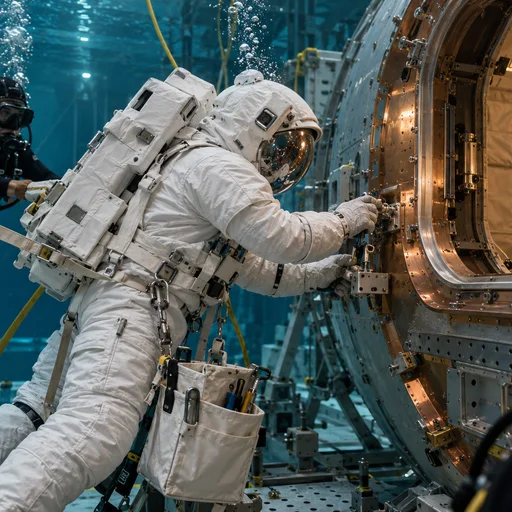
In brief
The 24th IAA 'Humans in Space' symposium, hosted by Italy, brought together the questions that decide whether people can stay in space for long periods: space medicine, the psychology of isolation, and life support systems. Those strategic discussions connect directly to the incremental engineering work agencies do every week.
Key points
- International collaboration is the only realistic way to absorb the complexity of human spaceflight.
- Research into space medicine, psychology and life support is what makes long-duration missions possible at all.
- Italy sits at the centre of the current global conversation on human exploration.
- Strategy set at symposia only matters if it steers the agencies' practical and technological development.
- The unglamorous daily research and engineering work is what turns ambitions into missions.
The ambition to extend human presence beyond Earth keeps driving research and engineering. Human spaceflight moves on two sides at once: the global strategic discussion, and the daily operational work of the space agencies.
The international conversation about living in space
The International Academy of Astronautics hosted the 24th “Humans in Space” symposium. The IAA is an independent non-profit organisation, recognised by the United Nations and founded in 1960; this biennial scientific forum was established in 1962 and has become a reference point for international exchange on the future of human spaceflight. The 2026 edition placed Italy at the centre of that conversation.
The discussions concentrated on what actually limits long stays in space. Space medicine and astronaut health. The effects of microgravity on the body and the mind. Life support systems inside space habitats. These are not abstract topics: they set the boundaries within which agencies such as the European Space Agency plan their work, week by week.
Italy and the future of human exploration
Italy played a central role in the symposium. The Italian Space Agency coordinated the organising committee, and the event closed on 24 April. It brought together scientists, astronauts and engineers to discuss psychology, isolation and working conditions on long missions, alongside nutrition, physical exercise and countermeasures. These are the aspects that decide whether a crewed mission is feasible, not the ones that make the headlines.
International collaboration is indispensable for handling the complexity of human exploration, including preparation for future missions to Mars.
ESA’s weekly image round-ups, such as the one covering 3-7 August 2026, show the other half of the picture: a continuous practical and technological effort that lines up with the strategic goals set at the symposium.
From strategy to daily operations
Space habitats and countermeasures against the effects of long stays in orbit were prominent themes at the 24th IAA symposium. These questions are not merely academic. They demand engineering and biomedical answers, and research institutes and operational agencies are constantly developing and testing those answers.
The work of agencies such as ESA is what turns these needs into hardware, ranging from fundamental research to applied technology development.
Their daily activities are incremental steps, sometimes summarised in short image galleries. That accumulation of small steps is what makes the ambitious visions of space exploration possible at all.
Sources: